Sunday, May 25, 2014

Everything Is Distributed - Forbes

Everything Is Distributed - Forbes

Everything Is Distributed

By Courtney Nash

In September 2007, Jean Bookout, 76, was driving her Toyota Camry down an unfamiliar road in Oklahoma, with her friend Barbara Schwarz seated next to her on the passenger side. Suddenly, the Camry began to accelerate on its own. Bookout tried hitting the brakes, applying the emergency brake, but the car continued to accelerate. The car eventually collided with an embankment, injuring Bookout and killing Schwarz. In a subsequent legal case, lawyers for Toyota pointed to the most common of culprits in these types of accidents: human error. "Sometimes people make mistakes while driving their cars," one of the lawyers claimed. Bookout was older, the road was unfamiliar, these tragic things happen.

However, a recently concluded product liability case against Toyota has turned up a very different cause: a stack overflow error in Toyota's software for the Camry. This is noteworthy for two reasons: first, the oft-cited culprit in accidents—human error—proved not to be the cause (a problematic premise in its own right), and second, it demonstrates how we have definitively crossed a threshold from software failures causing minor annoyances or (potentially large) corporate revenue losses into the realm of human safety.

"What is surprising is not that there are so many accidents. It is that there are so few. The thing that amazes you is not that your system goes down sometimes, it's that it is up at all."--Richard Cook "What is surprising is not that there are so many accidents. It is that there are so few. The thing that amazes you is not that your system goes down sometimes, it's that it is up at all."–Richard Cook

It might be easy to dismiss this case as something minor: a fairly vanilla software bug that (so far) appears to be contained to a specific car model. But the extrapolation is far more interesting. Consider the self-driving car, development for which is well underway already. We take out the purported culprit for so many accidents, human error, and the premise is that a self-driving car is, in many respects, safer than a traditional car. But what happens if a failure that's completely out of the car's control occurs? What if the data feed that's helping the car to recognize stop lights fails? What if Google Maps tells it to do something stupid that turns out to be dangerous?

We have reached a point in software development where we can no longer understand, see, or control all the component parts, both technical and social/organizational—they are increasingly complex and distributed. The business of software itself has become a distributed, complex system. How do we develop and manage systems that are too large to understand, too complex to control, and that fail in unpredictable ways?

Embracing failure

Distributed systems once were the territory of computer science Ph.D.s and software architects tucked off in a corner somewhere. That's no longer the case. Just because you write code on a laptop and don't have to care about message passing and lockouts doesn't mean you don't have to worry about distributed systems. How many API calls to external services are you making? Is your code going to end up on desktop sites and mobile devices—do you even know all the possible devices? What do you know now about the network constraints that may be present when your app is actually run? Do you know what your bottlenecks will be at a certain level of scale?

One thing we know from classic distributed computing theory is that distributed systems fail more often, and the failures often tend to be partial in nature. Such failures are not just harder to diagnose and predict; they're likely to be not reproducible—a given third-party data feed goes down or you get screwed by a router in a town you've never even heard of before. You're always fighting the intermittent failure, so is this a losing battle?

The solution to grappling with complex distributed systems is not simply more testing, or Agile processes. It's not DevOps, or continuous delivery. No one single thing or approach could prevent something like the Toyota incident from happening again. In fact, it's almost a given that something like that will happen again. The answer is to embrace that failures of an unthinkable variety are possible—a vast sea of unknown unknowns—and to change how we think about the systems we are building, not to mention the systems within which we already operate.

Think globally, develop locally

Okay, so anyone who writes or deploys software needs to think more like a distributed systems engineer. But what does that even mean? In reality, it boils down to moving past a single-computer mode of thinking. Until very recently, we've been able to rely on a computer being a relatively deterministic thing. You write code that runs on one machine, you can make assumptions about what, say, the memory lookup is. But nothing really runs on one computer any more—the cloud is the computer now. It's akin to a living system, something that is constantly changing, especially as companies move toward continuous delivery as the new normal.

So, you have to start by assuming the system in which your software runs will fail. Then you need hypotheses about why and how, and ways to collect data on those hypotheses. This isn't just saying "we need more testing," however. The traditional nature of testing presumes you can delineate all the cases that require testing, which is fundamentally impossible in distributed systems. (That's not to say that testing isn't important, but it isn't a panacea, either.) When you're in a distributed environment and most of the failure modes are things you can't predict in advance and can't test for, monitoring is the only way to understand your application's behavior.

Data are the lingua franca of distributed systems

If we take the living-organism-as-complex-system metaphor a bit further, it's one thing to diagnose what caused a stroke after the fact versus to catch it early in the process of happening. Sure, you can look at the data retrospectively and see the signs were there, but what you want is an early warning system, a way to see the failure as it's starting, and intervene as quickly as possible. Digging through averaged historical time series data only tells you what went wrong, that one time. And in dealing with distributed systems, you've got plenty more to worry about than just pinging a server to see if it's up. There's been an explosion in tools and technologies around measurement and monitoring, and I'll avoid getting into the weeds on that here, but what matters is that, along with becoming intimately familiar with how histograms are generally preferable to averages when it comes to looking at your application and system data, developers can no longer think of monitoring as purely the domain of the embattled system administrator.

Humans in the machine

There are no complex software systems without people. Any discussion of distributed systems and managing complexity ultimately must acknowledge the roles people play in the systems we design and run. Humans are an integral part of the complex systems we create, and we are largely responsible for both their variability and their resilience (or lack thereof). As designers, builders, and operators of complex systems, we are influenced by a risk-averse culture, whether we know it or not. In trying to avoid failures (in processes, products, or large systems), we have primarily leaned toward exhaustive requirements and creating tight couplings in order to have "control," but this often leads to brittle systems that are in fact more prone to break or fail.

And when they do fail, we seek blame. We ruthlessly hunt down the so-called "cause" of the failure—a process that is often, in reality, more about assuaging psychological guilt and unease than uncovering why things really happened the way they did and avoiding the same outcome in the future. Such activities typically result in more controls, engendering increased brittleness in the system. The reality is that most large failures are the result of a string of micro-failures leading up to the final event. There is no root cause. We'd do better to stop looking for one, but trying to do so is fighting a steep uphill battle against cultural expectations and strong, deeply ingrained psychological instincts.

The processes and methodologies that worked adequately in the '80s, but were already crumbling in the '90s, have completely collapsed. We're now exploring new territory, new models for building, deploying, and maintaining software—and, indeed, organizations themselves. We will continue to develop these topics in future Radar posts, and, of course, at our Velocity conferences in Santa Clara, Beijing, New York, and Barcelona.

Photo by Mark Skipper, used under a Creative Commons license.


Sent from Goay Joe Lie
Director of Joe Lie Beauty And Cosmetics
3rd, 3-45, Complex Bukit Jambul, Penang, Malaysia.
Contact : 016-404 3004
                016-521 9853

Tuesday, April 22, 2014

Natural gas and renewables will power country's economic growth | ASIA TODAY News & Events

Natural gas and renewables will power country's economic growth | ASIA TODAY News & Events


Natural gas and renewables will power country's economic growth | ASIA TODAY News & Events

Natural gas and renewable energy are poised for boom times in China over the coming decades, and they'll be key factors in the development of the nation's economy, a global energy agency said on Wednesday.

China's natural gas consumption will quadruple by 2035, becoming a driver of global demand for the fuel, according to a report released by the International Energy Agency in Beijing.

China consumed 147.1 billion cubic meters of natural gas in 2012, up 13 percent year-on-year.

"The rapid development of unconventional natural gas will continue to benefit North America, which is looking for opportunities to export these resources in the form of liquefied natural gas," said Maria van der Hoeven, executive director of the Paris-based IEA.

China is the largest potential buyer of that LNG.

Along with eastern Africa, Australia and North America, China will be an active participant in global natural gas trading, which will propel diversification of that market.

In most parts of the world, it's cheaper to generate electricity with coal than with natural gas.

But efforts to cut air pollution, address climate change and improve energy efficiency will determine the future of these two fuels.

There's no doubt that China's coal consumption will ease as the central government strives to raise the percentage of natural gas in its primary energy mix, the report said.

According to the IEA, China's coal use will peak in 2025. India will become the world's largest coal importer in the 2020s, replacing China.

China's natural gas development is playing a big role in the country's drive to improve its air quality.

"China's natural gas output has maintained double-digit growth in recent years, with an average annual growth rate of about 13 percent in the past 10 years," said Zhou Jiping, chairman of China National Petroleum Corp, the country's largest natural gas producer.

He said that the company will continue to increase natural gas imports, with more investments in pipelines and LNG projects.

The company, which operates about 70 percent of China's natural gas pipelines, invested about 300 billion yuan ($49 billion) from 2010 to 2013 in pipeline construction.

The nation's natural gas pipeline network totals about 55,000 kilometers. But Zhou said it still lags those of developed countries.

Renewable energy will account for half of the increase in global electricity generation by 2035, with wind and solar power to account for 45 percent of the increase among renewables, said the report.

China will be the biggest country in terms of renewable generation by 2035, producing more electricity through those methods than the European Union, the United States and Japan combined.

"China is working hard to raise its renewable energy use among the total mix, aiming to improve the country's air quality and cut emissions," said Gu Jun, deputy director of the international division of the National Energy Administration.

China isn't a member of the IEA, but Gu said that China will work more closely with the agency on energy issues.

The IEA and six emerging economies - China, India, Russia, South Africa, Brazil and Indonesia - have signed a joint declaration involving closer cooperation with regard to global energy challenges.

"As the global energy map is redrawn, the IEA's 28 member countries face many of the same energy challenges as key emerging economies, and we all share a common interest in building a secure, sustainable energy future," said Van der Hoeven.

"This is why the IEA has always attached such high importance to working with such dynamic countries outside our membership as China."

By Du Juan

SOURCE China Daily Green China


Sent from Goay Joe Lie
Director of Joe Lie Beauty And Cosmetics
3rd, 3-45, Complex Bukit Jambul, Penang, Malaysia.
Contact : 016-404 3004
                016-521 9853

Monday, March 3, 2014

10 Leadership Lessons From U.S. Commanding General John E. Michel | Vala Afshar


10 Leadership Lessons From U.S. Commanding General John E. Michel

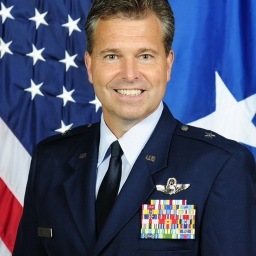
Brigadier General John E. Michel is the Commanding General, NATO Air Training Command-Afghanistan; NATO Training Mission/Combined Security Transition Command-Afghanistan; and Commander, 438th Air Expeditionary Wing, Kabul, Afghanistan. In addition to serving our nation as an active duty General Officer in the United States Air Force for 26 years and counting, General Michel enjoys helping people learn to walk differently in the world so they can become the best version of themselves possible, something he addresses in his book, Mediocre Me. General Michel is a widely recognized expert in culture, strategy and individual and organizational change.


2014-03-02-GenMichel.jpg
Commanding General John E. Michel


An accomplished unconventional leader and proven status quo buster who has successfully led several multi-billion dollar transformation efforts, General Michel has dealt with business transformation at a scale that most of us will never see in our lives. Here he shares with us his words of wisdom and expertise. These leadership lessons from the military can be translated for business and commercial organizations anywhere.

10 Leadership Lessons from the U.S. Military and Commanding General Michel:

1. Be a strong leader -- General Michel sums up the top three must-have attributes of a strong leader:

  • Leaders realize it's about people, not things: When you work a lot with technology it can be easy to confuse priorities and become infatuated with the technology. Strong leaders put the people first and leverage technology to make them more efficient.

  • Leaders take smart risks: This infers that things may go well or they may not go so well but either way, you have to be willing to try. Strong leaders have the courage to do the right thing.

  • Leaders are willing to fail forward and try again: Strong leaders realize things will not always work out the way they would like and when things don't go their way they regroup and realize that every opportunity is an opportunity to begin again, only smarter.

2. Co-create and collaborate with individuals -- Fear is a very significant issue that individuals and organizations have when they are moving into something that is uncomfortable. To combat fear when trying to drive transformation in an organization, leaders need to make it a top priority to involve every individual in the organization in the process of co-creation. General Michel's rule in guiding people through change is to put his vision in pencil, not marker. This communicates that you know that the whole organization has ideas on how to get you where you are going. "Creating a completely collaborative approach going forward is the only way to remove the fear of failure," says Michel, "When people are involved in that process they are willing to go to uncharted territory."

3. Include stakeholders throughout the process -- Speaking from experience from his time at the U.S. Transportation Command, which leverages a significant information backbone and has a massive group of stakeholders, General Michel advises involving key stakeholders as broadly as you can on a consistent basis. Sending a memo at the beginning and then filling them in on how it worked out at the end of the effort is not going to cut it. After establishing an initial vision, leaders should engage in an aggressive campaign to include stakeholders throughout the process. This consistent communication makes stakeholders feel they have a role and a shared understanding, reducing resistance and making them more apt to contribute. "No matter what business line you are in you will never go wrong if you involve people in the process," says Michel.

4. The customer is the common ground -- General Michel emphasizes the customer point of view by saying that any of us in business are in business to serve someone else. Getting everyone calibrated to the customer, making the customer the center, makes it easier for everyone to find a common ground to connect to. "If we all have a shared and beneficial outcome in serving our customer, we have a unified place where all our interests converge. Success is not defined by our own personal and business line goals; success is in the eyes of the customer," says Michel.

5. Demonstrate clear intent -- According to General Michel, the best organizations and individuals operate on disciplined thought, leading to disciplined action. He says one of most important things a leader can do is to supervise clear intent, which is something the military does well. The best organizations provide clear intent -- clear expectations to people about what you are doing and where you are going and clear expectations of what you need from people and what you expect them to do. Maintaining this high-level of transparency creates a state of trust where individuals are willing to share challenges and creates a culture where leaders will provide the resources they need. These conditions that a leader sets establishes how well organizations and individuals can pivot and be agile in doing what needs to be done, allowing the organization to shift and move with the changing demands of the marketplace.

6. Use technology tied to metrics to enable transformation -- General Michel calls IT a "force multiplier" and says that technology has been an enabler and accelerator for the military in Afghanistan enabling them to achieve the success much more quickly and cheaply in the face of shrinking timelines, budgets and personnel. To avoid technology that comes in late and over budget due to changes in expectations which quickly make the technology irrelevant, Michel says you have to closely monitor and utilize performance-based methods informed by clearly stated goals and objectives along way. "There is a propensity for people to add on, change and modify and overtime we end up off course. If we don't clearly tie technology to metrics, the initial intent can be sidetracked and lend itself for being irrelevant for what you originally intended to use it for," he warns.

7. Break projects down into smaller components -- In order to be more agile, stay within the budget and keep projects relevant it makes good sense to modularize capabilities. Wise leaders will look at a massive problem and start to immediately break it down into a series of components, align to see who is best able to handle those components and then orchestrate them into a collaborative whole. According to General Michel, the military has mastered this. He says that it's important to look at achieving effect by bringing the least amount of force upon the right place in a system to achieve what you want.

8. Push the boundaries of your potential -- In his book, Mediocre Me, General Michel focuses on achieving personal performance and helping people to figure out what is holding people them back from realizing their full potential as an individual or as a change leader in a world that needs talent more than ever. He says that if we don't push the boundaries of our potential we will start to atrophy and live much smaller lives than we are capable of living. People in this state of "prolonged equilibrium" enter a state of denial that they are capable of doing things and being more.

9. Be morally courageous -- For a leader to be morally courageous they must be willing to do something that is unpopular. They must be willing to make choices that are consistent with their values, even if that means going against the flow to do what they know is right. This can be an uncomfortable place and leaders need to have the courage to lean in when it would be easier to fall back. Leaders are especially under scrutiny by people who are looking on to see if they are going to walk the talk. In this way, we all going through serious levels of disruption, even in our personal lives. While courageous leaders say that pushing the boundaries is a smart, calculated risk, there are times when they also need to take a leap of faith -- it is in these leaps of faith where growth occurs and we inspire others.

10. Invest in lifelong learning -- General Michel is fortunate that the U.S. Air Force provides many opportunities for academic training and being on the move ensures he is constantly being exposed to different people, ideas and opportunities to stretch and actualize his potential. His parting advice to leaders of all industries: "Make lifelong learning something you believe in and invest in. The combination of personal commitment to making a constant investment in yourself and leveraging what your organization will afford you is where you become well-rounded and maximize the skills, attitudes and capabilities you bring to bear."

You can watch the full interview with Brigadier General John Michel here. Please join me and Michael Krigsman every Friday at 3PM EST as we host CXOTalk - connecting with thought leaders and innovative executives who are pushing the boundaries within their companies and their fields.


Sent from Goay Joe Lie
Director of Joe Lie Beauty And Cosmetics
3rd, 3-45, Complex Bukit Jambul, Penang, Malaysia.
Contact : 016-404 3004
                016-521 9853

Thursday, February 13, 2014

The middle class’s missing $1.6 trillion | The Great Debate


The middle class's missing $1.6 trillion

The United States was the world's first middle-class nation, which was a big factor in its rapid growth.  Mid-19th-century British travelers marveled at American workers' "ductility of mind and the readiness…for a new thing" and admired how hard and willingly they labored. Abraham Lincoln attributed it the knowledge that "humblest man [had] an equal chance to get rich with everyone else."

Most Americans still think of themselves as middle class.  But the marketing experts at the big consumer goods companies are giving their bosses the unsentimental advice that the middle class is an endangered species. Restaurants, appliance makers, grocery chains, hotels are learning that they either have to go completely up-scale, or focus on bargains for the struggling and budget-conscious.

Current income surveys, for statistical reasons, usually segment families by broad categories, which obscure the recent radical shift of income to a thin stratum of the super-rich. Well-to-do people may buy $100 coffee pots, but the lion's share of the income growth has been going to folks with five houses and staff to make the coffee.

For the last 15 years, an international consortium of economists has been building data bases on the income shares of the richest people in the developed countries, based on pre-tax market income including capital gains and tax-exempt income, and excluding government transfers. The American data reveals the greatest inequality by far, followed by Great Britain.

The stunning income distribution has a remarkable symmetry.  In 2012, the top 10 percent captured half of all reported income. But the top 1 percent got almost half of that — 22.5 percent — while the top 10th of 1 percent (0.1 percent) captured half of that. All three are within a few decimal places of the previous highs — which occurred in 1928, just before the market crash that ushered in the Great Depression.

The percentages don't quite capture the violence of the skew.  The stock market implosion of the 1930s followed by World War II's strict price controls and high marginal taxes brought the top 1 percent's income share down to about 9 percent by the end of the war.  Executive and financial sector pay was quite restrained, even through the good times of the 1950s and 1960s, and the 1 percent's income share did not start to rise until the late 1970s. It took off for the stratosphere then — amid the oceans of cash sloshing around Wall Street during the 1980s leveraged buyout boom.

The sums involved are enormous. The difference between the 1 percent's income share in 1975 (8.9 percent) and today's 22.5 percent is 13.6 percent.  That additional share of personal income is worth $1.6 trillion.  Each year.

What can you buy with $1.6 trillion?  Well, it's more than the annual outlays for Social Security payments, and about twice as large as Defense Department appropriations.  It's enough to pay off the federal debt held by the public in about seven years.

To amass that incremental $1.6 trillion, the 1 percent took 68 percent of all personal income growth between 1993 and 2012. To be fair, those same folks lost a great deal of income during the 2008 financial collapse, because much of their income comes from financial assets. But during the recovery of 2009-2012, they took a whopping 95 percent of the income growth — so their relative income and wealth positions are nearly all the way back to their pre-2008 high.

The canonical retort to such musings is that all segments of society benefit from a well-fed and contented super-rich. They are the ones, the argument goes, who supply the high-octane financial fuel to maintain America's advantage in high technology, keep its job-creation machinery humming, and lay the foundation for solid long-term growth.

Unfortunately, that is not proved true in recent experience. Since financial markets were liberalized in the 1980s, the finance sector's income and debt has soared, income inequality has skyrocketed, and the world economy has flopped from crisis to crisis – the Savings and Loan fiasco, the petrodollar debacle, and the leveraged buyout  circuses of the 1980s; the "hot-money" driven currency crises and hedge-fund collapses of the 1990s, and the hallucinatory mortgage games of the 2000s.

The dangers of runaway finance have been getting some academic attention of late, as scholars have begun connecting the dots between the super-rich and financial instability.

The very rich do invest productively, of course, and are also interested in capital preservation — so large segments of their portfolios are invested in safe, AAA-rated assets. As their income soared, however, their appetite for safe assets greatly outstripped the available supply. so the financial industry dutifully set about creating allegedly top-quality assets out of whatever lower-quality paper was at hand.

Adair Turner, the former head of the British financial regulatory authority, has outlined the "complexification" of finance that gave rise to the insane derivative structures and synthetic portfolios that unraveled so dramatically in 2008.

Stephen Cecchetti and Enisse Kharroubi, two senior economists at the Bank for International Settlements, have documented the "inverse U-shaped curve" of finance's contribution to the economy. The history of all developed countries shows that as finance employment rises, economic growth and productivity increases. But only up to a point. After that, continued growth of the finance sector often triggers falling growth and declining productivity.

The two authors also worked out a model of why this happens. As the financial sector grows more sophisticated, it competes with technology and manufacturing industries for the smartest and most ingenious engineers and mathematicians. At the same time, however, broad-gaged finance needs highly "pledgeable" assets that can be readily leveraged, like residential and commercial mortgages. (High-technology investing has a very high risk of failure, and so is the preserve of specialist venture-capital firms.)

The best and the brightest, they found, instead of creating new technology breakthroughs, become the servants of the super-rich — because they pay the most.  The  engineers devote themselves to increasing low-productivity, easily understandable assets in order to transmute them into new, highly complex, instruments that look super-safe, but often aren't. How to wreck an economy in three easy steps.

Reversing these realities, unfortunately, will take at least as much time as it did to create them. But we have to start somewhere and keep at it for a couple of decades.

The first step should be to continue to rein in the financial sector. Turner of the British financial authority, points out that a key founder of the "University of Chicago School" of free-market economists, Henry Simon, opposed almost all government regulation, except for the financial sector. Simon understood that very smart people applying high leverage to other people's money is an invitation to disaster, and so required tight regulation. The most important step today might be breaking up the mega-banks that emerged from the crash. Then they would be easier to police — and easier to indict.

Second should be to start rolling back the income shares of the very richest people by targeted taxation and other strategies, including radical tax simplification to reduce the legal cubbyholes for sheltering income. The economist Brad DeLong wonders why the middle classes haven't risen up and demanded fairer income distribution.

Reducing the top 1 percent's income share to, say, 14 or 15 percent, still much higher than the pre-1980 norm, would free up about $1 trillion for middle-class tax relief; higher minimum wages; pension, healthcare, and educational subsidies, or job-creating infrastructure construction.

That wouldn't solve all of our problems. But it would help put America back on course to realizing its original promise.

ILLUSTRATION (TOP): Matt Mahurin

PHOTO (INSERT 1): At least 20 private jet aircraft sit parked at the Friedman Memorial Airport during the Allen & Co Media Conference in Sun Valley, Idaho July 13, 2012. REUTERS/Jim Urquhart

PHOTO (INSERT 2): A model presents a creation from the Oscar De La Renta Autumn/Winter 2013 collection during New York Fashion Week, February 12, 2013.

PHOTO (INSERT 3): A couple walk with Hermes shopping bags as they leave an Hermes store in Paris March 21, 2013. REUTERS/Philippe Wojazer


Sent from Goay Joe Lie
Director of Joe Lie Beauty And Cosmetics
3rd, 3-45, Complex Bukit Jambul, Penang, Malaysia.
Contact : 016-404 3004
                016-521 9853

Wednesday, January 1, 2014

Dubai Captivates the World With Dazzling Firework Display at Burj Khalifa to Mark the New Year | ASIA TODAY News & Events


Dubai Captivates the World With Dazzling Firework Display at Burj Khalifa to Mark the New Year | ASIA TODAY News & Events

DUBAI, UAE, Jan. 1, 2014 /PRNewswire/ -- The iconic New Year's Eve fireworks display by Emaar Properties, the global property developer, at Burj Khalifa, the world's tallest building and Downtown Dubai, captivated the world and put the international spotlight on Dubai, alongside the largest fireworks display and celebrations held in the city at The Palm Jumeirah, The World Islands, and Burj Al Arab.

With millions of visitors - both residents and tourists - building the excitement in Downtown Dubai, the Burj Khalifa fireworks display was a true spectacle of artistic creativity. Ten stunningly different firework sequences on Burj Khalifa marked the run-up to a musical countdown for the New Year.

Each display also told the world a story - of the UAE's inspiring success, Dubai's positivity and ambition, and the design narrative of Burj Khalifa, which is choreographed to the captivating melody of symphonic orchestra music of Downtown Dubai, 'The Centre of Now.'

Abdulla Lahej, Group Chief Executive Officer, Emaar Properties, said: "The celebrations in Dubai now serve as a true benchmark for New Year's Eve galas across the world. Colourful, spectacularly planned, and creatively executed, the events also underline the vision of His Highness Sheikh Mohammed Bin Rashid Al Maktoum, UAE Vice President and Prime Minister and Ruler of Dubai, to ensure a positive, inspirational, and high-growth environment in the city, for people from around the world."

Starting off with a dramatic countdown through a display of effects racing up to the pinnacle of Burj Khalifa, 828 metres high, the fireworks began with spectacular sequences including a colourful salute to the nation with the colours of the UAE National Flag. Silver pearls lend an unmatched ambience in a sparkling celebration of Dubai's success, especially with its win to host the World Expo 2020. Another stunning display was the tribute to Burj Khalifa, with the fireworks evolving into petals, wrapping the tower much like the Hymenocallis desert flower, which inspired the design of the building.

In the grand finale, fireworks lit up every direction dramatically and a golden lattice formed across the sky. Rainbow effects filled all over Downtown Dubai as Dubai ushered in 2014.


Sent from Goay Joe Lie
Director of Joe Lie Beauty And Cosmetics
3rd, 3-45, Complex Bukit Jambul, Penang, Malaysia.
Contact : 016-404 3004
                016-521 9853

Monday, December 16, 2013

Mizuho Bank, Aeon Vietnam tie up for one-stop payment services- Nikkei Asian Review

Mizuho Bank, Aeon Vietnam tie up for one-stop payment services

HANOI -- Mizuho Bank will establish a partnership with Aeon Vietnam, a subsidiary of Japanese supermarket operator Aeon, to provide comprehensive cash management and payment transaction services for the retailer.

     The partnership will be the first attempt to offer such services in Vietnam, where management of sales data has lagged, and it is expected to help modernize the country's retail sector.

     Mizuho Bank and its existing Vietnamese business partner, Vietcombank, will form a comprehensive alliance with Aeon Vietnam on Monday. The two banks will handle all cash management and payment transaction operations for supermarkets directly operated by Aeon Vietnam and for the 120 or so stores in Aeon Vietnam's first Aeon Mall, which will open in January 2014, in Ho Chi Minh City.

     Sales data will be managed comprehensively through point-of-sale systems to be installed in each store and which are capable of supporting credit card transactions. The banks will also offer other financial services, including direct deposit of employee salaries.

     The partnership will also issue an Aeon-Vietcombank debit card. To promote sales and enhance customer loyalty, the card will offer such perks as points based on purchase amounts and coupons.


Sent from Goay Joe Lie
Director of Joe Lie Beauty And Cosmetics
3rd, 3-45, Complex Bukit Jambul, Penang, Malaysia.
Contact : 016-404 3004
                016-521 9853

Saturday, December 7, 2013

South Africa mourns Mandela

South Africa Mourns Mandela

By Tosin Sulaiman and Peroshni Govender JOHANNESBURG - South Africans united in mourning for Nelson Mandela on Friday, but while some celebrated his remarkable life with dance and song, others fretted that the anti-apartheid hero's death would leave the nation vulnerable again to racial and social tensions. President Jacob Zuma said Mandela would be buried on Dec. 15 at his ancestral home in the Eastern Cape. South Africans heard from Zuma late on Thursday that their first black president, a Nobel Peace Prize winner, had died peacefully at his Johannesburg home in the company of his family after a long illness. On Friday, the country's 52 million people absorbed the news that the statesman, a global symbol of reconciliation and peaceful co-existence, had departed forever. Zuma also announced Mandela would be honoured at a Dec. 10 memorial service at Johannesburg's Soccer City stadium, the site of the 2010 World Cup final. "We will spend the week mourning his passing. We will also spend it celebrating a life well lived," Zuma said. Mandela would be laid to rest at his ancestral village of Qunu, 700 km (450 miles) south of Johannesburg, in a plot where three of his children and other close family members are buried. Despite reassurances from public figures that Mandela's death at 95, while sorrowful, would not halt South Africa's advance from its apartheid past, there were those who expressed unease about the absence of a man famed as a peacemaker. "It's not going to be good, hey! I think it's going to become a more racist country. People will turn on each other and chase foreigners away," said Sharon Qubeka, 28, a secretary from Tembisa township. "Mandela was the only one who kept things together." Flags flew at half mast across the country, and trade was halted for five minutes on the Johannesburg stock exchange. But the mood was not all sombre. Hundreds filled the streets around Mandela's home in the upmarket Johannesburg suburb of Houghton, many singing songs of tribute and dancing. The crowd included toddlers carrying flowers, domestic workers still in uniform and businessmen in suits. Another veteran anti-apartheid campaigner, former Anglican Archbishop of Cape Town Desmond Tutu, said that like all South Africans he was "devastated" by Mandela's death. "Let us give him the gift of a South Africa united, one," Tutu said, holding a mass in Cape Town's St George's Cathedral. Tributes continued to pour in for Mandela, who had been suffering for nearly a year from a recurring lung illness dating back to the 27 years he spent in apartheid jails, including the Robben Island penal colony. U.S. President Barack Obama and British Prime Minister David Cameron were among those who praised him. The White House said Obama would travel to South Africa next week to participate in memorial events. The flags of the 193 United Nations member states along First Avenue in Manhattan, New York were lowered at 10 a.m. EST (1500 GMT) in honour of Mandela. The U.N. General Assembly observed a minute of silence. The loss was also keenly felt across the African continent. "We are in trouble now, Africa. No one will fit Mandela's shoes," said Kenyan teacher Catherine Ochieng, 32. Former Zambian President Kenneth Kaunda, an old ally of Mandela's in the struggle against apartheid, hailed him as "a great freedom fighter". POLITICIANS NOW "NOTHING LIKE MANDELA" For South Africa, the death of its most loved leader comes at a time when the nation, which basked in global goodwill after apartheid ended, has been experiencing labour unrest, growing protests against poor services, poverty, crime and unemployment and corruption scandals tainting Zuma's rule. Many saw today's South Africa - the continent's biggest economy but also one of the world's most unequal - as still distant from the "Rainbow Nation" ideal of social peace and shared prosperity that Mandela had proclaimed on his triumphant release from prison in 1990. "I feel like I lost my father, someone who would look out for me," said Joseph Nkosi, 36, a security guard. Referring to Mandela by his clan name, he added: "Now without Madiba I feel like I don't have a chance. The rich will get richer and simply forget about us. The poor don't matter to them. Look at our politicians, they are nothing like Madiba." The crowd around Mandela's home in Houghton preferred to celebrate his achievement in bringing South Africans together. For 16-year-old Michael Lowry, who has no memory of the apartheid system that ended in 1994, Mandela's legacy means he can have non-white friends. "I hear stories that my parents tell me and I'm just shocked that such a country could exist. I couldn't imagine just going to school with just white friends," Lowry said. Tutu tried to calm fears that the absence of the man who steered South Africa to democracy might revive some of the ghosts of apartheid. "To suggest that South Africa might go up in flames – as some have predicted – is to discredit South Africans and Madiba's legacy," Tutu said on Thursday. "The sun will rise tomorrow, and the next day and the next ... It may not appear as bright as yesterday, but life will carry on." MAY HURT ANC IN LONG TERM Zuma and his ruling African National Congress face presidential and legislative elections next year which are expected to reveal discontent among voters about poverty and unemployment 20 years after the end of apartheid. But the former liberation movement is expected to maintain its dominance in South African politics. Mark Rosenberg, Senior Africa Analyst at the Eurasia Group, said that while Mandela's death might give the ANC a sympathy-driven boost for the next elections, it would hurt the party in the long term. He saw Mandela's absence "sapping the party's historical legitimacy and encouraging rejection by voters who believe the ANC has failed to deliver on its economic promises and become mired in corruption". Mandela rose from rural obscurity to challenge white minority rule - a struggle that gave the 20th century one of its most respected and loved figures. He was among the first to advocate armed resistance to apartheid in 1960, but was quick to preach reconciliation and forgiveness when the white minority began easing its grip on power 30 years later. He was elected president in all-race elections in 1994 after helping to steer the divided country towards reconciliation and away from civil war. Mandela was awarded the Nobel Peace Prize in 1993, an honour he shared with F.W. de Klerk, the white Afrikaner president who released him in 1990. In 1999, Mandela handed over power to younger leaders better equipped to manage a modern economy, a rare voluntary departure from power cited as an example to African leaders. This made him an exception on a continent with a bloody history of long-serving autocrats and violent coups. (Additional reporting by Ed Cropley, Dave Dolan, Tiisetso Motsoeneng, Xola Potelwa and Stella Mapenzauswa in Johannesburg, Wendell Roelf in Cape Town, Lou Charbonneau and Michelle Nichols in New York, Brian Moonga in Lusaka.; Writing by Pascal Fletcher; Editing by Matthew Tostevin, David Stamp and Giles Elgood) 


Sent from Goay Joe Lie
Director of Joe Lie Beauty And Cosmetics
3rd, 3-45, Complex Bukit Jambul, Penang, Malaysia.
Contact : 016-404 3004
                016-521 9853

Sunday, November 17, 2013

The roadmap to China’s evolving automotive market | ASIA TODAY News & Events


The roadmap to China's evolving automotive market | ASIA TODAY News & Events

The second edition of NextGen Auto International China Summit will take place from 9 – 10 December at the Kerry Hotel in Shanghai's Pudong district. Co-organised by Messe Frankfurt (Shanghai) Co Ltd and the International Cooperation Centre of National Development and Reform Commission, the 2013 conference will focus on sustainable and globally-competitive solutions for China's automotive industry.

Attendees can expect to receive a wealth of knowledge on emerging global trends in energy-efficiency and smart technology. Through a series of business models, products, services as well as technological breakthroughs, NextGen Auto aims to facilitate a more profitable and sustainable future for all stakeholders in China's automotive market. During its 2012 edition, over 300 delegates attended, with professionals including OEMs, government policy makers, suppliers, dealers, aftermarket service providers and much more.

China is expected to lead the global market for the automotive industry in the coming years. The sheer size of the nation's automotive market has drawn interest from a number of key players in government policy as well as commercial development. But in order to grow the country's automotive market sustainably, a number of areas need to be properly addressed. Some of the topics of discussion to address these areas at NextGen Auto's 2013 edition include:

• E-mobility and electrification: What are the critical steps needed for faster market growth to be achieved?
• Hybrid vehicles and their potential for the passenger and commercial vehicle markets
• How can advanced fuels, hybrids, new materials and digital technology boost efficiency in commercial vehicles?
• Strategies for dealerships distributors: What new business and service markets are emerging?
• Digital marketing and social media: How can these powerful tools aid OEMs and dealerships?

The full list of speakers for 2013 is still in development. However over 35 influential industry experts have already confirmed their participation. Some of which include:

• Thomas Hajek, Board Member for Fiat Chrysler Group
• Boriana Lambreva, Senior Manager, Volkswagen (China)
• Martin Rosell, Managing Director, WirelessCar (Volvo)
• Klaus Dieter Breitschwert, Chairman, Bavarian Car Industry & Board Member, part of the German Federation for Motor Vehicle Trades and Repairs (ZDK)

Additionally, domestic policy and planning initiatives will be addressed by senior directors from China's National Development and Reform Commission (NDRC), Ministry of Science and Technology (MOST) and China Automotive Technology and Research Center (CATARC).

NextGen Auto International China Summit 2013 will be held concurrently with Automechanika Shanghai, Asia's largest event for auto parts, accessories, equipment and services, taking place from 10 – 13 December at the Shanghai New International Expo Center. For more information on the fee-based conference, please e-mail nextgenauto@hongkong.messefrankfurt.com

-end-


Sent from Goay Joe Lie
Director of Joe Lie Beauty And Cosmetics
3rd, 3-45, Complex Bukit Jambul, Penang, Malaysia.
Contact : 016-404 3004
                016-521 9853

Tuesday, November 5, 2013

Where on Earth will the waste go? | ASIA TODAY News & Events


Where on Earth will the waste go? | ASIA TODAY News & Events

Human waste production has multiplied tenfold in the last century. Rubbish – plastic bags, pizza boxes, empty beer cans, tinfoil, bubble wrap, old mattresses, rusty machinery, broken bottles, spent batteries, stale sandwiches, wilting salads and abandoned newsprint – is being generated faster than any other environmental pollutants, including greenhouse gases. And the problem will go on getting bigger until some time in the next century.

Daniel Hoornweg of the University of Ontario and Chris Kennedy of the University of Toronto in Canada and Perinaz Bhada-Tata of Dubai in the United Arab Emirates argue in Nature that the combination of urban growth and material affluence is creating a throwaway problem that won't go away. The average person in the US throws away his (or her) own body weight in rubbish every month. The detritus linked to modern living has not only grown tenfold in a century; by 2025 it will double again.

Solid waste disposal has become one of any modern city's biggest costs. Landfill sites near Shanghai, in Rio de Janeiro, and in Mexico City typically receive 10,000 tonnes of waste a day. The world now has more than 2,000 waste incinerators, some able to burn 5,000 tonnes a day, creating attendant problems of ash and air-polluting fumes.

Landfill waste is of course also a notorious source of methane – a potent greenhouse gas – but the authors are primarily concerned with the simple problems posed by the increasing volume of affluent society's rejected stuff.

It's a city thing, they say. Country dwellers don't buy so much packaged food, don't have factories and don't throw so much food away. City dwellers on average generate twice as much waste; the more affluent urbanites throw away four times as much.

The three researchers – an expert in energy systems, a civil engineer and an urban waste consultant – say that in 1900 there were 220 million people in the cities. That was 13% of the planet's population, and these townsfolk produced 300,000 tonnes of discarded stuff every day.

By 2000, there were 2.9 billion people in cities – 49% of the world's population – creating more than three million tonnes of solid waste per day. By 2025, it will be twice that = enough to fill a line of rubbish trucks 5,000 kilometres long every day.

International idiosyncrasies

Some countries are more profligate than others. Japan's citizens produce about one third less, per person, than US citizens, even though the gross domestic product per capita is about the same. China's solid waste generation is expected to go from 520,550 tonnes per day to 1.4 million by 2025.

"As a country becomes richer, the composition of its waste changes," the authors say. "With more money comes more packaging, imports, electronic waste and broken toys and appliances. The wealth of a country can readily be measured, for example, by how many mobile phones it discards."

Hoornweg and Bhada-Tata are the authors of a 2012 World Bank report in which they projected a world dustbin collection of 6 million tonnes a day by 2025. They calculate that under a business-as-usual scenario waste will grow with population and affluence as the century wears on, with increasing growth in South Asia and sub-Saharan Africa, and by 2100 it will exceed 11 million tonnes a day and peak sometime in the next century. But this scenario is not inevitable.

"With lower populations, denser, more resource-efficient cities and less consumption (along with higher affluence) the peak could come forward to 2075 and reduce in intensity by more than 25%," they say. This would save around 2.6 million tonnes per day.

SOURCE / Climate News Network


Sent from Goay Joe Lie
Director of Joe Lie Beauty And Cosmetics
3rd, 3-45, Complex Bukit Jambul, Penang, Malaysia.
Contact : 016-404 3004
                016-521 9853

Friday, October 25, 2013

New Chinese Travel Law Hits Korea's Tourism Industry | ASIA TODAY News & Events


New Chinese Travel Law Hits Korea's Tourism Industry | ASIA TODAY News & Events

Significantly fewer Chinese tourists are visiting Korea since a new travel law took effect in China this month, leaving travel and retail businesses here that counted on a continuing boom high and dry.

Korea's biggest travel agency Hana Tour on Thursday said the number of Chinese tourists it handled shrank to 4,000 in October, down 60 percent from 10,000 last month.

Mode Tour said its tours attracted 13,000 Chinese last month, but that fell to 5,000 in October. The numbers include all bookings until the end of this month.

"The decline is mainly due to the new Chinese travel law," said a Mode Tour staffer.

The new travel law bans including shopping in tour programs, charging extra, and demanding tips. It aims to prevent travel agencies from attracting customers with cut-price tours that sometimes fall short of even the round-trip airfare, and then trying to make the money back from tips, optional extras and herding them into certain shopping outlets that pay commissions.

That sent the average cost of a package tour to Korea up 30 to 40 percent.

"As most group tours to Korea were cut-price packages, it seems they suffered directly from the new travel law. Demand for travel to Europe or the U.S. has stayed about the same," said a Korean resident in Shanghai.

Although a lot of Chinese tourists came here during China's national holiday week, which ended Oct. 7, the number for the month is now less than half that of September.

"There have been almost no Chinese customers since the national holiday," said a travel agent. "It feels even more serious because we had so many Chinese customers until September."

Department stores and duty-free shops are worried since booming sales to Chinese tourists had made up a welcome buffer in this recession.

A department store spokesperson said, "Business is expected to suffer a considerable drop if the number of Chinese tourists plummets. We'll have to think of a new promotional strategy."


Sent from Goay Joe Lie
Director of Joe Lie Beauty And Cosmetics
3rd, 3-45, Complex Bukit Jambul, Penang, Malaysia.
Contact : 016-404 3004
                016-521 9853

Sunday, October 20, 2013

Time For Business to Shift Focus to The Long Term | Ian Goldin


Time For Business to Shift Focus to The Long Term

In a week when we have seen the effects of political gridlock writ large in US politics, the report Now for the Long Term feels well-timed in its strong call for leaders in politics, business and civil society to include long-range thinking and planning into the mix. The immediate pressures of today cannot be ignored but neither can the need to create a sustainable future; not least if we want to leave a positive legacy.

The danger of leaving a damaging legacy is real. The growing financial debt, rising carbon emissions, dwindling natural resources and the escalating burden of chronic disease all have the potential to leave unsolvable problems for the next generation if we fail to act on the scientific bases that show clearly the difficulties we are storing up. The Oxford Martin Commission for Future Generations has brought together scholars from the University of Oxford with 19 leaders from the world of business, government and civil society, to look at the implications of business as usual and find practical ways to overcome short-termism.

In business it is more difficult than ever to balance the pressures of today with goals for the next decade. Business incentives tend to revolve around swift successes; increasing weight is attached to mark-to-market accounting, quarterly returns and short-term incentive bonuses. Uncertainty in global markets has led many companies and business leaders to seek safety in quick returns on investment. Questions about the role of government and unpredictable behavior, such as was manifest in the recent Washington stand-off, compounds the problem.

It is not that the short-term is unimportant. After all, if firms go bankrupt there is no point in planning for the long term. We forget at our peril that the private sector is the largest source of jobs and that flourishing companies are vital for growth, and are a particularly valuable asset in a world that is still suffering the cascading effects of the 2008 financial crisis. Government employment is contracting, so the private sector must generate the jobs required for economies to recover from the crisis.

Sustainable growth, however, requires that we go beyond the immediacy of quarterly reporting. While short-term measures can be a pointer to sustainable growth, they are not enough. Simply relying on short-term measures of success in business can create longer- term instability and risk.

While the future is full of opportunity arising from the extraordinary advances of recent decades in terms of living standards, life expectancy and economic development, it is also highly uncertain and characterized by a pressure on resources and economic inequality. The rational actions of individuals and firms when aggregated lead to escalating demand for food, water, minerals and energy which, together with the environmental consequences of escalating global consumption, is unsustainable. In order to understand the implications of our current patterns of consumption, we need urgently to reassess the relationship between shareholder and societal value and shift the focus significantly to the long term.

Dominic Barton, the Managing Director of McKinsey & Company, and Mark Wiseman, President and CEO of Canada Pension Plan Investment Board, have both argued that firms are under increasing pressure to be short-term at the cost of longer-term strategic decision-making. Performance metrics based on share prices are used at the expense of long-term value creation. At the same time rewards are skewed to investors who want to make a quick return and who have little concern for a company's long-term prosperity.

Many companies and commentators are pressing for a shift towards the long term. Barton and Wiseman have sought to influence the buy-side by encouraging institutional investors and corporate directors to steer capital towards long-term value creation. The World Business Council for Sustainable Development is helping to galvanise the global business community towards sustainable ends. The B-Team, founded by Sir Richard Branson and Jochen Zeitz, is among the most recent private sector responses to short-termism, calling on businesses to prioritise people and planet alongside profit.

This work is encouraging but too many businesses are failing to show leadership and take responsibility on the scale required. Some global firms have become skilled at transcending national jurisdictions to avoid obligations, be they on the environment or tax. In a globalised commercial world, ensuring compliance requires coordination between countries that often compete for investment. In Now for the Long Term, the report of the Oxford Commission for Future Generations, we call for a move to "revalue the future", which includes a number of ideas for focusing business on the long term. Our proposal for "innovative, open and reinvigorated institutions" fit for this century, not the last, includes a call for a Voluntary World Taxation and Regulatory Exchange. This Exchange will raise pressure on companies to disclose their tax planning and transfer pricing arrangements and on governments to reveal preferential tax rulings.

Collectively, we need to rethink corporate governance so that owners and boards embrace longer-term mindsets and responsibilities to society at large. Above all, we need business leaders to invest their significant ingenuity, creativity and resources on creating long-term value.

Changing course in such ways may seem contrary to the rational choices of individual investors and companies. However, if we do not step up to this challenge, the collective result may be consequences so damaging future generations will wonder how we squandered our truly remarkable opportunities. The consequences of our actions will resonate for generations to come. But the choices are ours, and need to be taken now.

This post is part of a series produced by The Huffington Post and The Oxford Martin Commission for Future Generations, in conjunction with the release of the latter's report Now for the Long Term, published by the Oxford Martin School at the University of Oxford. The report's recommendations aim to break the gridlock that undermines attempts to address the world's biggest challenges; to bridge the gap between knowledge and action; and to redress the balance between short-term political pressures and a need to secure a sustainable, inclusive and resilient future. To see all the posts in the series, click here. For more information on the report, click here.


Sent from Goay Joe Lie
Director of Joe Lie Beauty And Cosmetics
3rd, 3-45, Complex Bukit Jambul, Penang, Malaysia.
Contact : 016-404 3004
                016-521 9853

Friday, October 11, 2013

The Future Of Education Eliminates The Classroom, Because The World Is Your Class | Co.Exist | ideas + impact


The Future Of Education Eliminates The Classroom, Because The World Is Your Class

This probably sounds familiar: You are with a group of friends arguing about some piece of trivia or historical fact. Someone says, "Wait, let me look this up on Wikipedia," and proceeds to read the information out loud to the whole group, thus resolving the argument. Don't dismiss this as a trivial occasion. It represents a learning moment, or more precisely, a microlearning moment, and it foreshadows a much larger transformation--to what I call socialstructed learning.

Socialstructed learning is an aggregation of microlearning experiences drawn from a rich ecology of content and driven not by grades but by social and intrinsic rewards. The microlearning moment may last a few minutes, hours, or days (if you are absorbed in reading something, tinkering with something, or listening to something from which you just can't walk away). Socialstructed learning may be the future, but the foundations of this kind of education lie far in the past. Leading philosophers of education--from Socrates to Plutarch, Rousseau to Dewey--talked about many of these ideals centuries ago. Today, we have a host of tools to make their vision reality.

Think of a simple augmented reality app on your iPhone such as Yelp Monocle. When you point the phone's camera toward a particular location, it displays "points of interest" in that location, such as restaurants, stores, and museums. But this is just the beginning. What if, instead of restaurant and store information, we could access historical, artistic, demographic, environmental, architectural, and other kinds of information embedded in the real world?

This is exactly what a project from USC and UCLA called HyperCities is doing: layering historical information on the actual city terrain. As you walk around with your cell phone, you can point to a site and see what it looked like a century ago, who lived there, what the environment was like. Not interested in architecture, passionate about botany and landscaping instead? The Smithsonian's free iPhone and iPad app, Leafsnap, responds when you take a photo of a tree leaf by instantly searching a growing library of leaf images amassed by the Smithsonian Institution. In seconds, it displays a likely species name along with high-resolution photographs of and information on the tree's flowers, fruit, seeds, and bark. We are turning each pixel of our geography into a live textbook and a live encyclopedia.

So look beyond MOOCs (Massive Open Online Courses) in thinking about the future education. In our focus on MOOCs and how they are likely to disrupt existing classrooms and educational institutions, particularly colleges and universities, we are missing the much larger story. Today's obsession with MOOCs is a reminder of the old forecasting paradigm: In the early stages of technology introduction we try to fit new technologies into existing social structures in ways that have become familiar to us.

MOOCs today are our equivalents of early TV, when TV personalities looked and sounded like radio announcers (or often were radio announcers). People are thinking the same way about MOOCs, as replacements of traditional lectures or tutorials, but in online rather than physical settings. In the meantime, a whole slew of forces is driving a much larger transformation, breaking learning (and education overall) out of traditional institutional environments and embedding it in everyday settings and interactions, distributed across a wide set of platforms and tools. They include a rapidly growing and open content commons (Wikipedia is just one example), on-demand expertise and help (from Mac Forums to Fluther, Instructables, and WikiHow), mobile devices and geo-coded information that takes information into the physical world around us and makes it available any place any time, new work and social spaces that are, in fact, evolving as important learning spaces (TechShop, Meetups, hackathons, community labs).

We are moving away from the model in which learning is organized around stable, usually hierarchical institutions (schools, colleges, universities) that, for better and worse, have served as the main gateways to education and social mobility. Replacing that model is a new system in which learning is best conceived of as a flow, where learning resources are not scarce but widely available, opportunities for learning are abundant, and learners increasingly have the ability to autonomously dip into and out of continuous learning flows.

Instead of worrying about how to distribute scarce educational resources, the challenge we need to start grappling with in the era of socialstructed learning is how to attract people to dip into the rapidly growing flow of learning resources and how to do this equitably, in order to create more opportunities for a better life for more people.


Sent from Goay Joe Lie
Director of Joe Lie Beauty And Cosmetics
3rd, 3-45, Complex Bukit Jambul, Penang, Malaysia.
Contact : 016-404 3004
                016-521 9853

Sunday, October 6, 2013

Taiwan's Big Brand Blues


Taiwan's Big Brand Blues | ASIA TODAY News & Events

Acer has suffered huge losses, and HTC has seen NT$900 billion in market value evaporate over the past two years. Why is the branding dream of Taiwan's high-tech sector crumbling?

The winds of autumn have proved to be unsettling for the world's major high-tech brands, portending a new era of maturity in a sector accustomed to robust growth. Leading vendors have felt the pinch, with Apple's growth slowing and Microsoft acquiring Nokia after unsuccessful forays into mobile devices.

Two of Taiwan's most prominent high-tech brands, computer vendor Acer Inc. and smartphone-maker HTC Corp., have also seemingly entered the autumns of their lives after facing setbacks on several different battlefields.

Acer, Taiwan's branding standard-bearer after being founded 37 years ago, has suffered two consecutive years of heavy losses and was still showing few signs of emerging from its slump in the third quarter this year. Rumors are swirling that there could be a change in management or even that the company could be sold.

Sixteen-year-old HTC has lost NT$900 billion in market value in just two years. After hitting a high of NT$1,300 per share in late April 2011, HTC's stock price plummeted to NT$122 on Sept. 9, the lowest since the company went public in March 2002. Though the stock has rebounded in recent weeks, closing at NT$140 on Sept. 24, many believe the company faces a precarious future.

It will likely post a loss in the third quarter, and it is forecast to ship about 20 million smartphones this year, barely half of the total when the company was at its peak in 2011. It could be soon overtaken by upstart Chinese smartphone brand Xiaomi, which was launched just over three years ago.

Adding insult to injury, new product designs were recently stolen and sold by company insiders.

Even HTC's chairwoman acknowledges problems exist while trying to sound upbeat.

"I think smartphones are still in their infancy, and there are still plenty of opportunities, such as smart cities. There are inevitably ups and downs when building a brand," says HTC chairwoman Cher Wang, as confident as ever. "I need to get better. The CEO also has to get better."

So what exactly has happened to Taiwan's high-tech brands? Why has the country's high-tech sector, helped by tax breaks from the government, with access to the best talent and global markets, come out battered and bruised every time it has pursued its branding dream?

Could it be that only powerful and prosperous countries are able to spawn strong high-tech brands?

"From Acer and AsusTek to HTC, everyone is up against the same fundamental challenge," laments one brand entrepreneur in private.

Without a big home market, Taiwanese high-tech companies are naturally at a disadvantage in the crucial area of defining standards, such as source code for operating systems and basic communications patents. Taiwan is also not interested in adopting the Korean model of pouring the entire country's resources into forging one big brand.

"A small country has to concentrate its resources. To some extent, it has to put up with the spirit of capitalism," says Chiu Yi-chia, the chairman of National Chengchi University's Graduate Institute of Technology, Innovation & Intellectual Property Management. Taiwan's high-tech policies, Chiu says, put a premium on fairness and diversity and amount to a sheep (socialism) in a wolf's clothing (capitalism). As a consequence, Taiwanese tech brands, inherently disadvantaged from the outset, are pushed further off-balance as they take on the global market of 7 billion people.

Acer and HTC represent the leading companies of two different generations. Acer's battleground is the previous-generation notebook computer market of about 200 million units a year; HTC competes in the recently skyrocketing smartphone market of about 1 billion units a year. HTC has been building a brand for five years, Acer for nearly 40 years.

Yet the two vendors have suffered the similar fate of highly volatile corporate profits, and in fighting for market share, both have encountered the same two double-edged swords.

Double-edged Sword No. 1: An International Team

Over time, the two brands have seen major fluctuations in their earnings, but HTC's have been more dramatic than Acer's.

"HTC faces a market that is five times bigger than Acer's, but the time it's had to build a brand has been compressed to 1/6th the time Acer had, putting it under intense pressure. So HTC's sudden rises and falls are really not surprising," explains a high-tech entrepreneur. In today's tech wars, more resources are being brought to the fight than ever before, with a huge amount being burned in the money pit known as "brand marketing."

"It's hard for Taiwanese brands to survive. Samsung sells smartphones as if it were selling shampoo. It even trains it salespeople based on methods used by Proctor & Gamble and Tesco," says a former manager for Samsung in Taiwan. The manager explained that the Korean electronics giant treats tech brands as fast-moving consumer goods brands, pouring huge sums into marketing. It invests three times as much as HTC in sales support in Taiwan, and salespeople at any authorized retailer get a NT$500 bonus for every Samsung smartphone they sell.

Talent is another area where a major financial investment is necessary.

"If you want to fight a global battle, you need international talent," Acer chairman J.T. Wang once said. Acer has shown the willingness to offer internationally competitive salaries to hunt for talent around the world.

"Taiwan does not have a national image or market development advantages to sell, so Taiwanese companies must rely on salaries above the norm to hire top international talent," observes Bei Lien-ti, a professor in National Chengchi University's Department of Business Administration.

Yet Acer's practice of paying top salaries for both local and international talent have not translated to improving results.

Top executives, including Walter Deppeler, the former chairman of the marketing committee and now a senior corporate vice president, Steve Lin, the president of Asia Pacific operations, and Oliver Ahrens, Acer's president for Europe, the Middle East and Africa, are all paid salaries of between NT$50 million and NT$100 million a year, more than Acer corporate president Jim Wong. But that has not stopped the company's global PC market share from falling to 8.3 percent in the second quarter of 2013 from 13 percent in the second quarter of 2010.

"They're paid high salaries, but there are no signs that the company is turning things around," complains one disgruntled Acer insider, who says that since former Acer CEO Gianfranco Lanci left the company in 2011 with a hefty severance package, Acer no longer has the financial wherewithal to hire such top-flight international execs.

As for HTC, it boldly bought a stake in American headphone brand Beats in a deal negotiated by former chief operating officer Matthew Costello, only to have to sell its stake to stop the bleeding from its investment.

The company also paid US$45 million for streaming video service provider Saffron Digital in early 2011, a deal brokered by chief strategy officer Ronald Louks. Louks left the company not long after, and HTC sold Saffron this year for US$47 million. The smartphone maker never did get the synergies from Beats or Saffron Digital it had hoped for.

"Can we really call using a bunch of foreign executives to make a bunch of cross-border acquisitions internationalization?" asked a resentful former HTC manager.

So why are Taiwanese tech companies so unable to work together with an international operations team over the long haul?

"Because Taiwanese do not have boards of directors with strong functions and sound operations," says National Chengchi University's Chiu, noting that the management of Taiwanese tech brands generally depends too much on an all-powerful CEO.

In contrast, in the United States, IBM's board was able to enlist Louis Gerstner to help revive the company, and Yahoo's board recruited Marissa Mayer to do the same at Yahoo.

"Only if the board mechanism is sound can the company build the strength of its management step by step," Chiu says.

Another key to brand marketing is finding an appropriate price point based on the product's positioning in the market. But because HTC's customers have been telecom operators and Acer's customers have been distributors, neither has been able to get a firm grasp of the end user, making it more challenging for them to develop insight into consumers' needs.

Double-edged Sword No. 2: Technological Prowess

HTC relied on its edge in technology, including producing the first Android smartphone, to become the preferred supplier of telecom operators around the world. But after riding its technology to the heights of the industry, HTC neglected the rapid shift in the smartphone market to mid-range and low-cost models.

As the smartphone market exploded over the past five years, HTC failed to see that the main competitive emphasis was evolving from functions to price.

"With Apple now resorting to highlighting the functions of its phones' CPU specs, you know that there is no longer much differentiation between products. You can't count on the brand alone to determine success or failure," says the chairman of an electronics contractor with annual sales of about NT$100 billion.

HTC's high prices have resulted in a backlash from telecom operators. "When all you're doing is assembling screens and CPUs made by others, what business do you have charging a high price? HTC needs to reposition itself. Its main competitors should not be Samsung or Apple but rather Sony, LG and Huawei," the president of a telecom company says bluntly.

Being able to reposition a company at any time is a necessary survival skill in today's brand wars, as Acer has also learned because of its limitations in product flexibility.

Acer relied on a single product category (personal computers) and an individual's strong control of a distribution channel (Lanci in Europe) to thrive, but as the market shifted to mobile devices and Lanci departed (leaving massive inventory in Europe), the secrets of its past success have turned into the catalysts of failure.

Also, determined to build up market share, Acer acquired the Gateway and eMachines computer brands in the United States in late 2007 and Dutch computer maker Packard Bell in early 2008, but those acquisitions have turned into heavy burdens (eMachines no longer exists). The declining value of its sub-brands forced the company to take an "intangible asset" impairment charge of NT$3.5 billion in early 2013, a development that has seriously weakened Acer.

How Small Countries Can Outwit Rivals

Over the past 40 years, Taiwanese tech brands have yet to develop management capabilities across borders, across different fields and across product lines. "Using the same management system to handle different markets and different products only leads to trouble," says Chu Po-young, a professor in the Department of Management Science at National Chiao Tung University.

So does that mean that companies from only the world's biggest economies – the United States and China – can fight the battles for scale and platforms in today's global high-tech wars?

"Small countries can still outwit bigger rivals, as long as they understand how to focus," says Liu Shuen-zen, a professor in National Taiwan University's College of Management. Taiwan can open a new battlefield and cultivate B2B brands, he suggests, pointing to the Swiss model as one worth emulating.

"Switzerland emphasizes 'precision and focus.' Through its sharp concentration and technical proficiency, Switzerland commands 80 percent of the global market for ink used on bank notes, and its watches generate high margins," says Liu, who believes Taiwan could also become a global "hidden champion" in several niche markets.

Following an arduous journey will not be without reward. Though equipment manufacturer ASML is the last company standing in the Dutch semiconductor sector, the world's semiconductor vendors cannot do without its lithography system, and its gross margin last year was 42 percent.

England's attempt to create its own Silicon Valley may have failed, but Cambridge gave birth to ARM Holdings, which developed the architecture on which most of the processors used in smartphones around the world are based. The company may be relatively small, but by leveraging its strength, it has been able to deal powerhouse Intel a severe blow.

Acer and HTC are both likely to post losses for the third quarter, and their short-term prospects remain uncertain. But considered over the longer term, the hard road traveled by Taiwan's high-tech brands remains worth pursuing. After all, success is built on the pillars of failure.

Translated from the Chinese by Luke Sabatier


Sent from Goay Joe Lie
Director of Joe Lie Beauty And Cosmetics
3rd, 3-45, Complex Bukit Jambul, Penang, Malaysia.
Contact : 016-404 3004
                016-521 9853

Saturday, October 5, 2013

China now world's 3rd largest investor


China now world's 3rd largest investor | ASIA TODAY News & Events

Even as global outward foreign direct investment contracted last year, China set records in this area, becoming the world's third-largest investor, a government report said on Monday.

China's outbound FDI rose 17.6 per cent year-on-year in 2012 to a record high of US$87.8 billion, according to the 2012 Statistical Bulletin of China's Outward Foreign Direct Investment, which was released by the Ministry of Commerce, the National Bureau of Statistics and the State Administration of Foreign Exchange.

The report was released during the 17th China International Fair for Investment and Trade, held in Xiamen, Fujian province, which began on Sunday and closes on Wednesday.

Global ODI slid 17 per cent last year, amid uncertainties confronting the world economy.

China's increase made the nation the world's third-largest investor last year after the United States and Japan, for the first time since the country began to release the data a decade ago.

China was the world's sixth-largest investor in 2011, with an outward FDI flow of $74.65 billion, according to last year's report.

"The Chinese government introduced measures to encourage outbound direct investment in pursuit of the 'going abroad' strategy, and the country's outward FDI maintained robust growth in recent years," said Zhou Zhencheng, commercial counselor of the department of outward investment and economic cooperation of the Ministry of Commerce.

Huo Jianguo, president of the Chinese Academy of International Trade and Economic Cooperation, a think tank of the ministry, said that the surge in outward FDI was mainly driven by domestic enterprises eager to tap overseas markets and profit from using global resources.

"Debt crises and slowing growth in developed economies opened up great opportunities for Chinese enterprises to invest abroad, and the renminbi's appreciation helped the process," Huo said.

The nation's non-financial ODI went up 13.3 per cent last year to $77.73 billion, accounting for 88.5 per cent of the total.

Financial ODI surged 65.9 per cent to $10.07 billion, according to the bulletin.

Flows to the US jumped 123.5 per cent to $4.05 billion, making the nation the second-largest destination for China's ODI.

Total ODI to developed economies, at about $13.51 billion, was virtually flat year-on-year at $13.42 billion, according to the bulletin.

Hong Kong received 58.4 per cent — $51.24 billion — of the mainland's ODI.

The city, with its well-developed services in finance, accounting and consulting, serves as a gateway for domestic enterprises to explore international markets, according to Victoria Tang, associate director-general of Invest Hong Kong, a body under the special administrative region's government charged with promoting investment.

Outward FDI to the British Virgin Islands and Cayman Islands, where Chinese investors set up businesses to bypass investment restrictions in developed economies, slid 72.5 per cent to $3.07 billion in 2012.

Developed economies where growth has been weak since the 2008 financial crisis have welcomed ODI from China, which has huge foreign-exchange reserves and cash-rich enterprises, Zhou said.

"The fast increase of China's outward FDI also showed that the country's manufacturing is significantly gaining international competitiveness.

"Further, the country is eager to establish transnational cooperation through mergers and acquisitions in international markets," Huo added.

In 2012, Chinese enterprises completed 457 outward M&A transactions valued at $43.4 billion. Those were record highs for both numbers and value.

These M&As covered 10 sectors, including mining, electricity, culture, manufacturing and transportation.

China's ODI grew 41.6 per cent annually between 2002 and 2012. The government has set a goal of increasing ODI at an average annual rate of 17 per cent through 2015, when it is forecast to reach $150 billion.

The full-year figure this year "is likely to see China's outward investment grow more than 15 per cent", Zhou said.

He added that the robust growth will be maintained in the near future, in view of the country's economic restructuring and the move by its industries to shed excess capital and invest their cash.

As of the end of 2012, China's total outstanding ODI was $531.94 billion, the 13th-largest in the world, said the report.

The amount was small compared with the US outward FDI stock of $5.19 trillion and the United Kingdom's $1.8 trillion, the report said, because "China's outbound direct investment took off rather late".

Chinese investors have established about 22,000 overseas enterprises in 179 countries and regions, "and about 79.2 per cent of them made profits or maintained a balance", Zhou said.

He added that Chinese enterprises are facing rising risks and challenges, including political unrest in Africa and Southeast Asia.

Other challenges include increasing competition from developed economies and restrictions in those markets.

by Li Jiabao


Sent from Goay Joe Lie
Director of Joe Lie Beauty And Cosmetics
3rd, 3-45, Complex Bukit Jambul, Penang, Malaysia.
Contact : 016-404 3004
                016-521 9853